
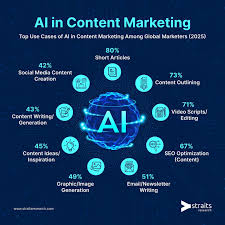
AI-Powered Content Marketing: Benefits & Limitations
In recent years, artificial intelligence has transformed the way businesses create, distribute, and optimize content. From automated blog writing to smart audience targeting, AI is becoming a powerful tool for marketers. However, while the advantages are impressive, AI is not without its challenges. This blog explores AI-Powered Content Marketing: Benefits & Limitations to help businesses decide how to use AI effectively.
What Is AI-Powered Content Marketing?
AI-powered content marketing refers to the use of artificial intelligence tools and technologies to plan, create, optimize, and analyze content. These tools rely on machine learning, natural language processing (NLP), and data analytics to understand user behavior and generate content faster and smarter.
Examples include:
- AI blog and copywriting tools
- Automated email marketing systems
- Content recommendation engines
- SEO optimization tools powered by AI
Benefits of AI-Powered Content Marketing
Understanding AI-Powered Content Marketing: Benefits & Limitations starts with knowing why so many marketers are adopting AI.
1. Faster Content Creation
AI tools can generate blog drafts, social media captions, product descriptions, and ad copies in minutes. This saves time and allows marketers to focus on strategy rather than manual writing
2. Data-Driven Personalization
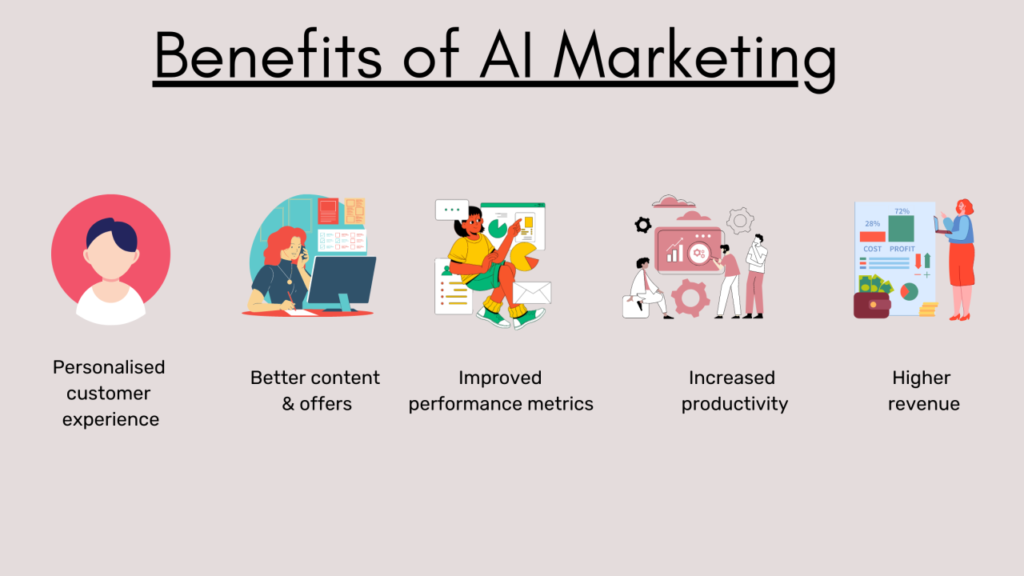
AI analyzes user behavior, preferences, and engagement patterns to deliver personalized content. This leads to higher engagement, better conversions, and improved customer experience.
3. Improved SEO Performance
Many AI tools help with keyword research, content optimization, meta descriptions, and readability. They can suggest improvements based on search engine trends, helping content rank better on Google.
4. Cost Efficiency
By automating repetitive tasks, businesses can reduce content production costs. Small businesses and startups especially benefit from AI-powered content marketing tools.
5. Performance Tracking & Insights
AI can analyze content performance in real time, identifying what works and what doesn’t. This helps marketers refine their strategies using accurate data.
Limitations of AI-Powered Content Marketing
While the benefits are strong, AI-Powered Content Marketing: Benefits & Limitations would be incomplete without discussing its drawbacks.
1. Lack of Human Creativity
AI-generated content often lacks emotional depth, storytelling, and originality. Human creativity and brand voice are still difficult for AI to fully replicate.
2. Risk of Generic Content
Since AI tools learn from existing data, content can feel repetitive or similar to what already exists online. This can affect brand uniqueness.
3. Accuracy & Context Issues
AI may generate incorrect or outdated information if not properly guided. Human review and fact-checking are essential.
4. Ethical & Copyright Concerns
AI tools may unintentionally use copyrighted data patterns, raising ethical and legal concerns for businesses.
5. Overdependence on Automation
Relying too much on AI can weaken strategic thinking and creativity. AI should support marketers—not replace them.
Best Practices to Use AI Content Marketing Effectively
To balance AI-Powered Content Marketing: Benefits & Limitations, follow these best practices:
- Use AI for research, drafts, and optimization—not final publishing
- Always add human editing and brand voice
- Combine AI insights with real customer understanding
- Focus on originality and value-driven content
- Use AI as a tool, not a shortcut
The Future of AI-Powered Content Marketing
AI will continue to evolve and become smarter, but human creativity, emotional intelligence, and strategic thinking will remain irreplaceable. Businesses that combine AI efficiency with human expertise will see the best results.
Conclusion
AI-Powered Content Marketing: Benefits & Limitations shows that AI is a powerful ally when used correctly. It improves speed, efficiency, and data-driven decision-makingjoyalsajan.com—but it cannote